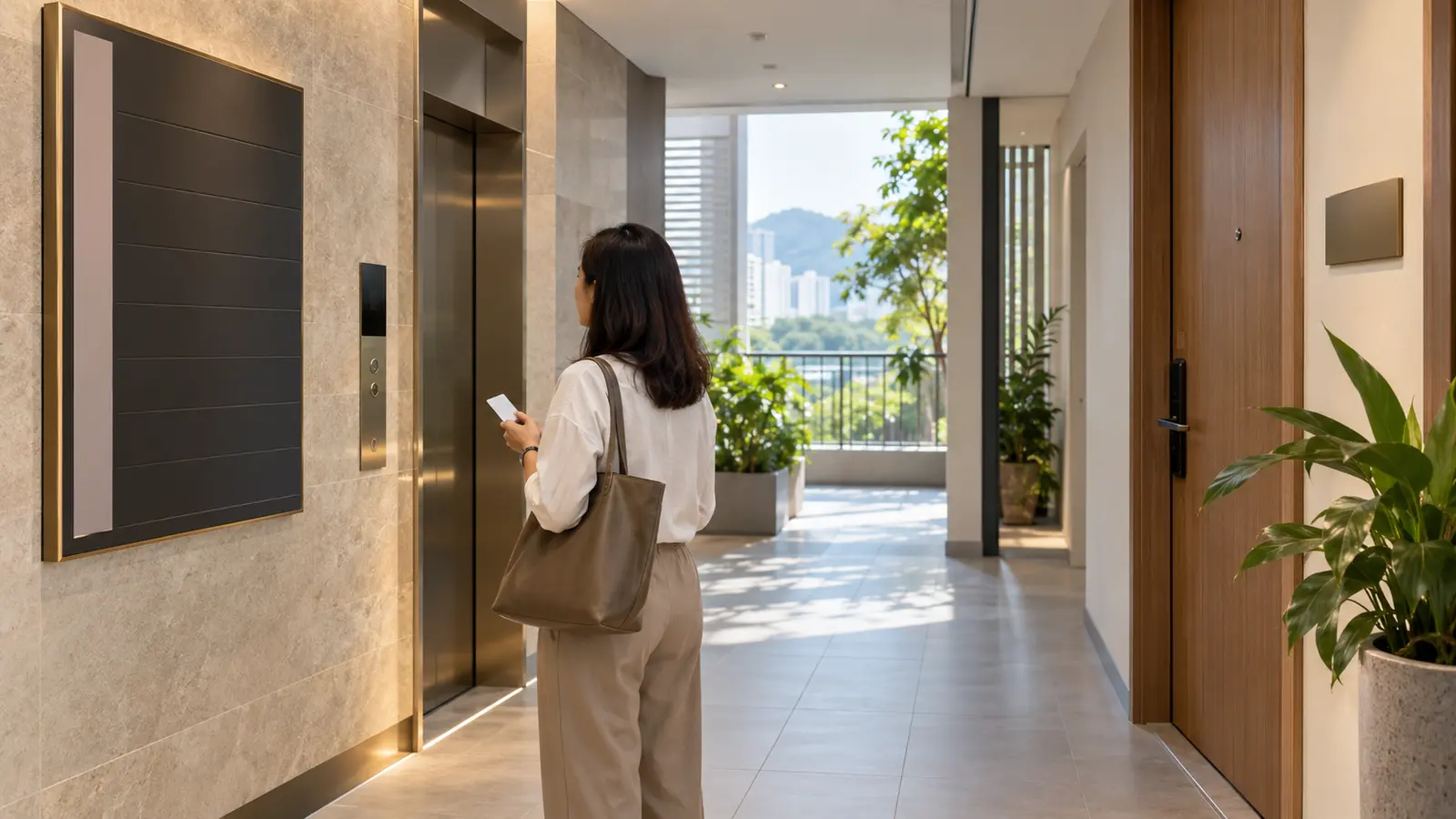
A condominium address can contain a tower or block, a floor, a unit, a parcel reference and a postcode. Because several numbers appear together, people often ask whether every part carries the same meaning. The responsible answer is no. Each label has a different practical job. Feng Shui, cultural symbolism and number analysis also ask different questions, so the address layers must stay clear before any interpretation begins.
The short answer: they can all matter, but not in the same way.
The unit number usually identifies the private home most directly. The block identifies a shared building or wing, while the floor locates the unit vertically. In Feng Shui, those physical levels may shape how someone approaches and experiences the property. In a number-analysis system, however, the starting source depends on the exact question and the recognised identifier—not on combining every visible digit.
Three address layers, three different jobs
| Layer | What it normally identifies | When it may be relevant |
|---|---|---|
| Block or tower | The shared building, wing or cluster reached before the private unit. | Questions about the building approach, common entrance, shared circulation or the exact official unit identifier. |
| Floor or level | The vertical location reached by lift, stairs or corridor. | Questions about real height, access, exposure, heat, wind, noise, evacuation and the route to the unit. |
| Unit number | The individual home or premises used by the occupants. | Questions about the private residence, its entrance, layout, purpose or its active property-number source. |
A label can be relevant without becoming a personal number meaning. The lift level, for example, matters practically and spatially even when its digit is not treated as a separate numerology reading.
How do these layers matter in Feng Shui?
Feng Shui starts with the place and the relationship between people and their surroundings. A practitioner may consider how the development is approached, the form of the tower, the common entrance, lift or stair route, corridor, unit door, internal layout, orientation and, in some schools, time. The number printed beside each layer is not a substitute for those conditions.
- At building level: The surroundings, drop-off, access, shared entrance and relationship between towers may form part of the environmental context.
- At floor level: The actual height and route may affect daylight, heat, wind, noise, privacy, convenience and emergency access. These are observable conditions, not effects caused by the floor digit.
- At unit level: The entrance, room arrangement, openings, movement and daily use are closer to the private home being examined.
For the wider environmental framework, begin with What Is Feng Shui? To see why numbered Feng Shui models are not lucky-digit lists, read How Are Numbers Used in Feng Shui?.
Which number should a property-number reading start with?
For Monad Mind’s Eight Star Number Energy framework, begin with the complete active property identifier closest to the question. For a person asking about their own apartment, this is usually the recognised unit number. A block letter or prefix belongs with it only when it forms part of that official or consistently used unit identifier. A separate floor label, postcode or building name is not added automatically.
Name one decision
Are you asking about living in the unit, comparing two units, running a home office, managing a rental or understanding the wider building?
Record the recognised identifier
Use the form shown consistently on the tenancy, sale, management or access records relevant to that decision.
Keep other layers separate
Write down the block, floor and unit individually before deciding whether any second layer needs its own context.
Do not build one giant address number
Joining the block, level, unit, street and postcode can create a sequence that no single person or system actually uses.
The existing guide What Can Your House Number Tell You? owns the complete property-number interpretation. This page only helps you choose the right apartment identifier before that reading begins.
A Malaysian condominium example
Imagine an address written as Tower C, Level 12, Unit 08. Those three labels should first remain separate. Tower C identifies the shared building. Level 12 describes the route and physical height. Unit 08 identifies the private premises. If management and legal records consistently recognise the home as C-12-08, that complete label can be recorded for assessment—but it should not be assumed that every method prepares it the same way.
- A Feng Shui question may focus on the tower approach, unit entrance, layout, orientation and real conditions.
- A cultural question may focus on how relatives, buyers or tenants react to a digit or label.
- A numerology question must name the system and the exact identifier it interprets.
- An Eight Star property-number question keeps the confirmed active source complete and in order, without importing a Feng Shui chart.
What about floors that are renamed or skipped?
Some developments replace a culturally sensitive floor label, use letters such as 3A, or show different labels in the lift, parcel documents and marketing materials. That can affect navigation, expectations and market response. It does not change the building’s physical height, and it does not prove that one label creates a better outcome.
Preferences around digits such as 8 and 4 are discussed separately in Are 8 and 4 Always Lucky or Unlucky? That cultural layer should not be presented as the complete Feng Shui of an apartment.
When should you examine more than the unit number?
Comparing two units in one tower
Keep each unit identifier separate; then compare practical layout, condition, price, light, noise and access before optional interpretation.
Comparing similar units in different towers
The wider tower and approach may add environmental context, but do not merge both tower and unit into one formula without a defined method.
Living and working from the same unit
The identifier stays the same while the question expands to residential and work use. Explain both purposes rather than calculating a second invented number.
Using a rental only briefly
Duration and frequency can change how relevant a source feels, but do not alter its fixed pattern or prove causation.
Practical checks come before symbolic interpretation
For any apartment decision, first verify affordability, title or tenancy terms, management rules, maintenance records, defects, fire exits, lift reliability, security, parking, accessibility, ventilation, daylight, noise and the household’s real needs. Engage qualified property, legal, financial, engineering, building or fire-safety professionals where required.
Four common mistakes to avoid
Treating every printed digit as one source
An address is a hierarchy of identifiers, not automatically one continuous number.
Calling a floor digit the Feng Shui
The physical level and its conditions may matter, but one printed digit cannot describe the property’s complete Feng Shui.
Assuming a missing floor changes reality
Renaming a level changes the label and perhaps social response, not its physical position.
Letting a preferred number overrule due diligence
A symbolic preference cannot make an unaffordable, unsafe or unsuitable unit a sound choice.
What none of these numbers can guarantee
A block, floor or unit number cannot certify structural safety, predict property value, prevent accidents, diagnose health concerns, secure wealth, protect relationships or guarantee a sale, rental or business result. Feng Shui and numerology are interpretive traditions, not established physical science. Use them as optional perspectives after practical evidence and professional advice.
Frequently asked questions
Should I combine my block, floor and unit number?
Not automatically. Record each layer separately and use only the complete recognised identifier required by the named method and question.
Does the apartment floor number affect Feng Shui?
The physical level, access, exposure and relationship to the building may be relevant. The printed floor digit alone is not the complete Feng Shui.
Is the unit number more important than the block number?
For a question about the private home or an active property-number source, the unit usually comes first. A building-level question may require wider block context.
What if my official address and lift label are different?
Record both and identify which one is used legally, by management and in daily access. Do not silently substitute one for another.
Does a skipped fourth or thirteenth floor improve the property?
A renamed level may change cultural comfort or market response, but it does not change the physical height or guarantee a better outcome.
Should I reject an apartment because of one number?
No. Start with safety, affordability, legal checks, condition, location and practical fit. One number is not enough to decide.
Start with the layer closest to your real question.
For an apartment, the unit usually identifies the private home; the block and floor provide different shared and spatial contexts. Keep the layers separate, state which framework you are using and never let one attractive or disliked digit make the whole property decision.